Today, a warehouse is an integral part of any trading system. Regardless of the size of the enterprise, the warehouse plays a key role in building business processes.
Today, a warehouse is an integral part of any trading system. Regardless of the size of the enterprise, the warehouse plays a key role in building business processes.
And here, an automated business management system comes to the aid of the manager. How effective it will be depends almost entirely on how well thought out the implementation project was.
What is warehouse automation based on?
Warehouse automation is based on two main components. First of all, an accounting system is required for implementation. It can be based on either a conventional inventory control system or a WMS system developed specifically for warehouse automation. These systems can be divided into several classes. As a rule, small and medium-sized warehouses keep records in conventional inventory control systems or in Excel. Large warehouses, in contrast, require specialized WMS systems. The second, no less important component is technical means. One of the most important is a data collection terminal with specialized software. This is the main tool of a storekeeper. In small warehouses (several tens of square meters), you can do without a data collection terminal, but in larger ones, it is impossible to do without this equipment. There is auxiliary equipment - Barcode scanners for accounting system operators, barcode printers for printing marking labels. A competent combination of all these components and a balanced approach to their selection allow for maximum optimization of warehouse operations and, consequently, more efficient organization of all business processes at the enterprise.
Zones and tasks
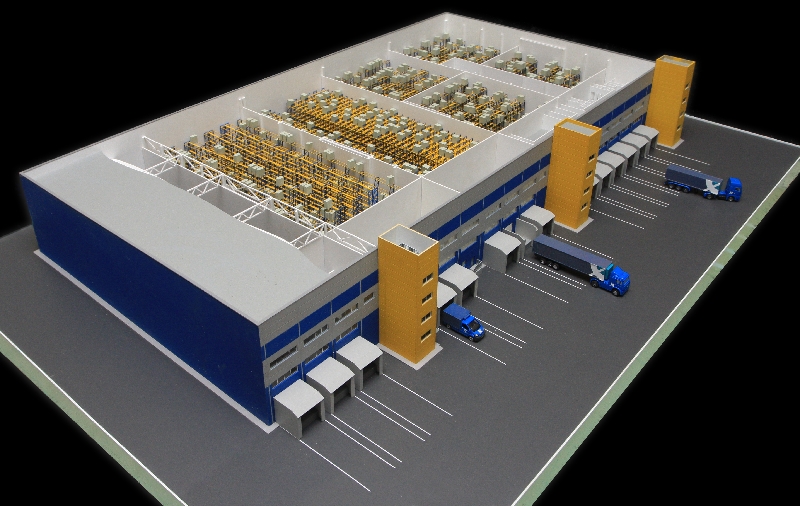
A modern warehouse solves three main tasks: goods receipt, storage and shipment. Focusing on these tasks, designers carefully consider three corresponding zones: the receiving zone, the storage zone and the shipping zone. Barcoding equipment (data collection terminals, printers and barcode scanners) is used in each of these zones. However, the requirements for the functionality and security of the equipment may differ.
1. Goods receipt zone This is the zone where goods are placed upon arrival at the warehouse. Convenient access roads and ample space for unloading incoming goods are critical conditions for efficient warehouse operation. Failure to meet these requirements can lead to slow unloading and receiving of goods, resulting in reduced profits. Equally important is the prompt receipt and labeling of goods. This can be accomplished with mobile equipment—barcode scanners, data collection terminals, and barcode printers. To reduce the time required for labeling goods, a warehouse worker, upon receiving a shipment, checks the delivery documents against the required quantity, then determines the total quantity of goods on the pallet from the shipping documents, and then labels the entire pallet with a single barcode. Using a mobile printer, the employee can print the barcode in seconds without interrupting the goods receipt process. This method eliminates the time-consuming and tedious process of entering each individual item in the receiving area when it becomes congested. Currently, the use of RFID technology is actively developing, including in the warehousing industry, and equipment for scanning RFID tags is also relevant.
2. Storage area The storage area can be conditionally divided into short-term and long-term. The long-term storage area contains goods with a long turnover period or a long shelf life. Goods are stored on pallets on high racks. The short-term storage area is intended for piece or fast-moving goods on smaller racks, which ensures their faster movement if necessary. Data collection terminals and barcode scanners allow you to quickly find the required product, conduct an inventory and control its movements.
3. Shipping Area This area should also have sufficient space for convenient shipping. It may include a pre-sale preparation area. The area typically operates as follows: on the evening before shipping, warehouse workers process shipments confirmed for shipment and move them from the storage area directly to the shipping area. Data collection terminals, which provide online processing of data on all products in the warehouse, allow these actions to be carried out quickly.
To summarize, the following main processes carried out by warehouse workers can be distinguished:
Primary labeling of goods upon receipt at the warehouse
Receipt of goods
Identification of goods when selecting an order
Search for goods in the warehouse
Order formation
Shipment in the database Sales tools. Key Points
Today, there are two fundamentally different classes of data collection terminals on the market:
1) Data collection terminals running DOS-based operating systems. These terminals have a minimal set of functionality, which ensures an affordable price. As a result, almost no DOS terminal supports operation over networks such as Wi-Fi, and it is not possible to build real-time operation on their basis. In addition, DOS-based terminals are not suitable for medium and large warehouses, because the functionality potentially implemented in them does not allow for fast and accurate work with barcodes.
2) Data collection terminals running the WindowsCE and WindowsMobile operating systems. These are more modern solutions, which, thanks to their wide functionality, practically do not limit the user in organizing their work. Modern software solutions provide a completely different level of organization of input, output and processing of information. When choosing such data collection terminals, users have the opportunity to choose a variety of configurations of installed components. Thus, modern data collection terminals support all the latest information transmission technologies: GPS, GSM, GPRS, HSDPA, eGPRS, Wi-Fi. There are also terminals with a minimal set of wireless transmission technologies - Wi-Fi and Bluetooth.
To solve business problems in the receiving and shipping areas discussed above, the vast majority of users will only need minimal data collection terminal configurations. Wi-Fi provides the necessary level and quality of connection to the server and inventory control system. Components such as GSM and GPRS are only necessary for data collection terminals used in receiving and shipping areas if users need a backup data transmission channel, for example, if a Wi-Fi access point fails or the signal in the warehouse is too weak. It should also be noted that global warehouse automation statistics show that receiving and shipping areas primarily use data collection terminals running various versions of the Windows CE operating system (currently versions 5.0 and 6.0). This system is quite sufficient for normal operation in online mode, and the presence of Windows Mobile in the terminal only provides full support for GSM and GPRS modules, which, as mentioned above, can be used as support protocols.
Regardless of how the equipment is connected to the accounting database - through third-party software or by connecting in remote access mode using the built-in RDP connection client, there are a number of data collection terminals into which the listed software can be easily integrated and which can solve the specified problems.




 RSS Feed